GIVE US A CALL! 1 (800) 363-ALARM (2527)
Free Shipping On Most Orders Over $250 - Some Exclusions Apply

For additional security coverage, explore related motion detectors, glassbreak detectors, door and window contacts, shock sensors, and other security sensors designed for compatible alarm systems.


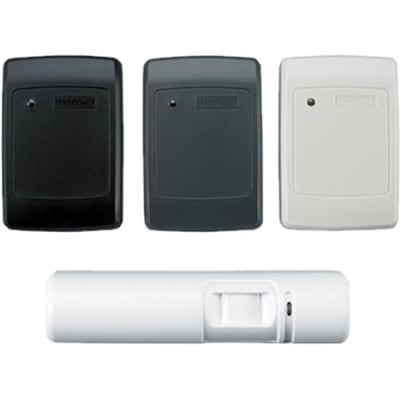

PIR Motion Sensors are widely used in security alarm systems to detect movement within a protected area by sensing changes in infrared energy. Also known as PIR motion detectors or passive infrared detectors, these sensors are available in a wide range of configurations for residential, commercial, and professional security applications.
JBJ Supply offers wired and wireless PIR motion sensors for compatible security alarm systems, including standard PIR detectors, pet-immune motion sensors, ceiling-mount PIR sensors, addressable PIR detectors, and advanced motion detectors with additional detection technologies. Select the appropriate PIR sensor based on alarm panel compatibility, detection coverage, mounting location, communication method, and application requirements.
A PIR motion sensor uses passive infrared technology to detect changes in infrared energy within its field of view. When a moving object produces a change in the infrared pattern detected by the sensor, the PIR detector can generate an alarm signal for the connected security system.
Because PIR sensors do not need to transmit an active detection signal, they are commonly used as reliable motion detection devices in intrusion alarm systems. Modern PIR motion detectors may incorporate specialized optics, digital signal processing, temperature compensation, pet immunity, tamper detection, and other technologies designed for specific security applications.
Wired PIR motion sensors connect directly to compatible security alarm panels or detection systems. They are commonly used in new installations as well as security systems where existing sensor wiring is available.
Wired PIR detectors are available in different configurations, including conventional zone sensors and addressable models. Depending on the product, features may include selectable sensitivity, tamper protection, adjustable coverage, interchangeable lenses, end-of-line support, and specialized mounting options.
Always verify the detector's electrical specifications, zone requirements, panel compatibility, wiring configuration, and installation instructions before selecting a wired PIR sensor.
Wireless PIR motion sensors provide flexible installation without requiring a dedicated wired connection between the detector and security panel. Wireless PIR detectors are designed for specific security platforms and communication technologies, so compatibility with the receiver or alarm panel should be confirmed before ordering.
Depending on the model, wireless PIR sensors may transmit alarm, tamper, supervisory, and low-battery information to the compatible security system. Battery-powered models can be particularly useful when adding motion detection to an existing installation where running new sensor wiring is impractical.
Pet-immune PIR motion sensors are designed for security applications where controlled movement from pets may otherwise contribute to unwanted alarms. Pet immunity specifications vary by detector and should be evaluated according to the manufacturer's stated installation conditions and weight limits.
Different manufacturers use different detection technologies and signal-processing methods to distinguish human-sized movement from smaller animals. For example, Honeywell offers PIR detectors with selectable pet immunity, while DSC offers PIR and dual-technology detectors with specified pet-immunity ratings.
Professional PIR motion detectors can incorporate advanced optics and signal-processing technologies designed to provide consistent detection while helping reduce unwanted alarms. Features vary by model and can include temperature compensation, white-light immunity, RF immunity, adjustable sensitivity, look-down detection, tamper protection, and digital signal analysis.
Honeywell's IS3000 family, for example, uses extended-range Fresnel optics and provides features such as wall-to-wall coverage, selectable look-down, PIR white-light immunity, flexible mounting, and enhanced false-alarm immunity.
Some security motion detectors combine passive infrared detection with another sensing technology, such as microwave detection. These dual-technology motion detectors can use information from multiple detection methods to improve motion analysis in demanding security environments.
Dual-technology products should not be confused with conventional PIR-only sensors. If your security system requires a standard PIR detector, verify the exact detector type before purchasing. DSC, for example, offers separate PIR products as well as dual-technology detectors combining PIR and microwave detection.
Ceiling-mount PIR sensors provide a different detection pattern from standard wall-mounted motion detectors and can be useful when a protected area requires broad overhead coverage. Ceiling-mount models are available with different detection patterns and specifications, including 360-degree configurations.
Choose a ceiling-mount PIR detector based on ceiling height, coverage pattern, protected area, mounting requirements, and compatibility with the security system.
Addressable PIR motion detectors communicate with compatible addressable security systems using the appropriate communication bus or addressing technology. These detectors can simplify device identification and system management in installations designed around addressable security equipment.
Compatibility is system-specific. Verify that the addressable PIR detector is approved for the particular control panel, bus, and security platform before installation. DSC offers addressable passive infrared detectors with features including interchangeable lenses and built-in tamper protection.
Choosing the right PIR Motion Sensor starts with identifying the security system and the area that needs protection. Consider these factors before selecting a detector:
PIR motion sensors are commonly used in residential security, commercial security, offices, retail locations, warehouses, institutional buildings, and other monitored environments. They can be integrated with other security devices such as door and window contacts, glassbreak detectors, alarm control panels, and other intrusion detection equipment.
Using multiple types of sensors can provide layered detection throughout a protected property. Select each detector according to the specific coverage area and the requirements of the security system.
PIR motion detectors are not universally interchangeable. Wired sensors may have specific electrical, resistance, zone, or addressable-bus requirements, while wireless models are generally designed for a particular manufacturer's wireless platform or receiver.
Before ordering a PIR motion sensor, verify the exact security panel, receiver, communication technology, detector type, wiring requirements, and compatibility information provided by the manufacturer.
PIR stands for Passive Infrared. PIR motion sensors detect changes in infrared energy within their detection area and are widely used in security alarm systems.
A PIR motion detector is a passive infrared security sensor designed to detect movement by analyzing changes in infrared energy within its field of view.
Both wired and wireless PIR motion sensors are available. Wired models connect to compatible alarm system zones or buses, while wireless models communicate with compatible security panels or receivers.
A pet-immune PIR motion sensor is designed to reduce unwanted alarms caused by qualifying pet movement under specified installation conditions. Pet immunity ratings and limitations vary by model.
A conventional PIR detector uses passive infrared sensing, while a dual-technology detector combines PIR with another sensing technology, such as microwave detection. The appropriate choice depends on the security application and system requirements.
Some PIR detectors are specifically designed for outdoor applications, while many standard PIR sensors are intended for indoor installation. Always verify the manufacturer's environmental rating and installation requirements before using a PIR detector outdoors.
No. Compatibility depends on whether the detector is wired, wireless, conventional, addressable, or designed for a specific manufacturer's security platform. Always confirm compatibility before purchasing.